Halfway House
Play Halfway House
Halfway House Screenshots






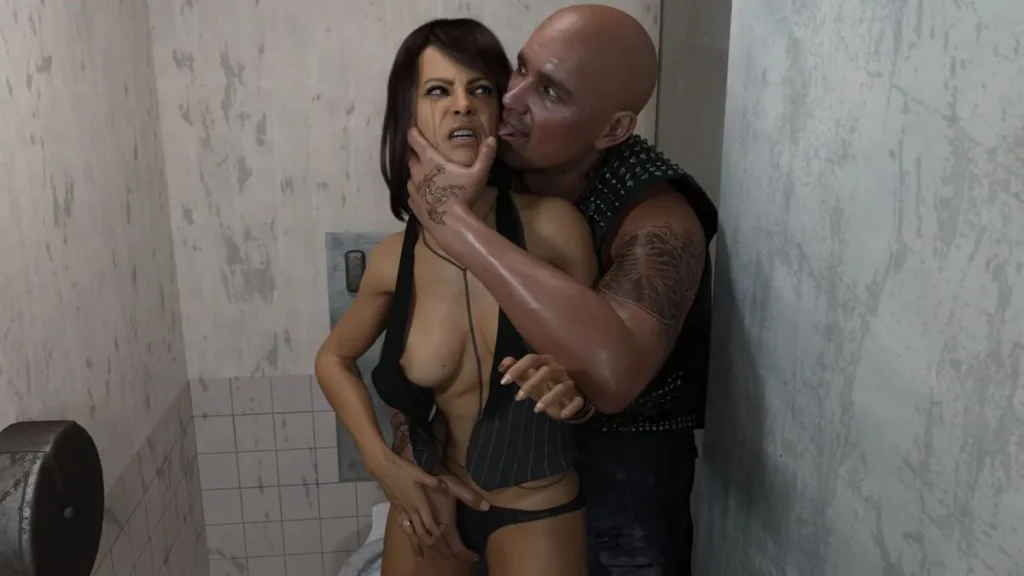




Halfway House review
Master gameplay mechanics, character interactions, and progression systems
Halfway House is a mature-rated visual novel game that combines mystery, horror, and dating simulation elements into a unique interactive experience. This comprehensive guide explores the game’s core mechanics, character relationships, progression systems, and strategic approaches to maximize your gameplay experience. Whether you’re new to the game or looking to unlock all content, this walkthrough provides detailed insights into activities, relationship building, and the various paths available throughout your journey.
Understanding Halfway House Gameplay Mechanics
Stepping into Halfway House for the first time, I was completely overwhelmed. 😅 I had this beautiful, sprawling mansion, a cast of intriguing characters, and absolutely no clue how to make any meaningful progress. I’d spend my in-game days randomly chatting or choosing activities that seemed fun, only to hit a wall where my relationships just wouldn’t deepen. Sound familiar? I was missing the blueprint—the underlying game mechanics that turn random actions into a strategic path to success.
Mastering Halfway House isn’t about brute force; it’s about understanding a delicate, interlocking system of stats, moods, and preferences. Think of it as learning the rules of a fascinating new social board game. Once you know how the pieces move, you can plan your strategy instead of just hoping for the best. This guide will break down exactly how the core systems work, giving you the tools to build the relationships you want, efficiently manage your resources, and unlock all the content this rich game has to offer. Let’s dive into the engine that makes this world tick.
Core Game Systems and Progression
At its heart, Halfway House is driven by two parallel progression tracks: your relationships with the characters and your management of the house itself. While upgrading rooms and earning money is important, the true core of the Halfway House game mechanics is the relationship progression system. This isn’t just a simple “like” meter; it’s a nuanced simulation built on two key pillars: Trust and Attraction.
Imagine Trust as the foundation of any real relationship. It’s built through consistent, respectful interaction and support. It opens doors to deeper conversations, personal secrets, and is often the gatekeeper for more meaningful story scenes. Attraction, on the other hand, is the spark, the chemistry. It’s fueled by flirtation, shared fun, and physical closeness. You need both stats to truly advance. A character might trust you implicitly as a friend (high Trust, low Attraction) but never see you as a romantic partner. Conversely, you might share a strong physical spark (high Attraction) but lack the depth of Trust needed for a committed connection.
This duality is what makes the character interaction system so engaging. Every choice you make, from a dialogue option to an activity invitation, feeds into one or both of these stats. Your primary tools for influencing them are the activities you share and the conversations you have. But here’s the crucial part: these tools are filtered through each character’s unique personality and current mood.
A character’s mood acts as a multiplier on your efforts. If someone is feeling cheerful or relaxed, your positive actions yield better rewards. If they’re irritable or sad, your attempts to build Attraction might fall flat, or even lose you a little Trust. Learning to read and influence mood is a core part of mood management gameplay. Sometimes, the best strategic move isn’t the activity that gives the biggest stat reward on paper, but the one that fixes a bad mood, setting you up for greater success tomorrow. Progression isn’t linear—it’s a dance of balancing stats, managing moods, and investing your two most precious resources: in-game time and your action points (often represented by energy or money).
Activity System and Relationship Building
If dialogue is the conversation, then activities are the shared experiences that build your history together. The activity system is your primary engine for relationship progression. It’s where you spend your resources to earn stat points and, ultimately, unlock new levels of intimacy. Every activity in Halfway House has a specific cost (in-game currency or an action point), a time requirement, and provides a set reward to Trust and/or Attraction.
But it’s not just about picking the most expensive option! 🎯 Each character has preferences. Sofia might gain huge Attraction points from a romantic “Stargazing” session but only modest Trust from a casual “Coffee Chat.” Marcus, however, might build incredible Trust by “Working Out” together, seeing it as a sign of mutual discipline. This is where the game’s depth shines. You must become an observant player, noting which activities make a character’s eyes light up in the dialogue afterward.
A critical nuance is the concept of diminishing returns. Doing the same activity over and over will see its stat rewards decrease. The game encourages you to diversify your shared experiences, just like in real life. However, the ratio of Trust to Attraction the activity provides generally remains consistent. So, if “Cooking Dinner” always gives a 3:1 Trust-to-Attraction ratio, it will still do so on the tenth time, just at a lower overall point value.
To plan your strategy, you need a clear map. Below is a comprehensive breakdown of common activities, their costs, and what they offer. Use this as your cheat sheet for planning your daily in-game schedule.
| Activity Name | Cost | Time | Trust Reward | Attraction Reward | Intimacy Unlock Notes |
|---|---|---|---|---|---|
| Coffee Chat | Low ($10) | Short (1 hr) | +5 | +2 | Baseline, always available. |
| Watch a Movie | Medium ($25) | Long (2 hrs) | +8 | +6 | Often unlocks more personal dialogue options. |
| Stargazing | Low ($5) | Medium (1.5 hrs) | +3 | +10 | High Attraction path; may unlock first kiss opportunity. |
| Work Out Together | None (Energy) | Medium (1.5 hrs) | +12 | +4 | Solid Trust builder; can unlock scenes showing vulnerability. |
| Cooking Dinner | High ($40) | Long (2 hrs) | +15 | +5 | Major Trust event; frequently gates deeper story beats. |
| Give a Gift | Varies | Short (0.5 hr) | +2 to +10* | +1 to +8* | *Reward scales heavily with gift preference and mood. |
| Deep Conversation | None (Energy) | Short (1 hr) | +10 | +0 | Pure Trust builder, best used after shared activities. |
This table is your cornerstone for an activity rewards guide. Now, let’s talk strategy. Your goal is to use this data efficiently.
Pro Tip: Early on, focus on low-cost activities that align with a character’s known preferences to quickly discover what they love. Once you know, you can invest your larger resources (like the cost of “Cooking Dinner”) for maximum payoff when their mood is high.
Resource management is key. Don’t blow all your money on fancy dates in one week. Mix free “Deep Conversations” with moderate-cost activities. Pay attention to the time of day; some activities are only available in the evening. This mood management gameplay loop—check mood, select appropriate activity, monitor stat growth—is the satisfying core loop of Halfway House. By strategically sequencing activities, you create a natural-feeling relationship progression that leads to the ultimate goal: unlocking new levels of intimacy.
Character Interaction Mechanics
Dialogue is where your stats get put to the test. The character interaction system in Halfway House is a responsive web of flags, stat checks, and memory. Characters remember your major choices and will reference them later, creating a real sense of consequence. But more than that, your available dialogue options are directly filtered by your Trust and Attraction stats.
Ever been frustrated that the flirtatious option was greyed out? That’s because your Attraction stat with that character isn’t high enough. That heartfelt, vulnerable question you want to ask? It’s likely locked behind a Trust threshold. The game uses these stat checks to ensure the relationship develops at a believable pace. You can’t jump straight to professing love if you’ve only built a superficial friendship.
This is where your activity rewards guide planning pays off in the conversation. Let me give you a real example from my playthrough. I was focusing on Maya, an artistic character who values deep connection. I saw she was in a “Melancholic” mood. My instinct was to cheer her up with a fun, high-Attraction activity like “Watch a Comedy.” But I knew her preferences leaned toward meaningful interaction.
Instead, I chose the “Coffee Chat”—a low-stakes, low-cost activity that often unlocks supportive dialogue. During the chat, I picked options that validated her feelings (boosting Trust) instead of trying to immediately fix them. This improved her mood to “Contemplative.” The next day, with her mood improved, I invested in the “Visit an Art Gallery” activity (a known preference for her). The combined Trust from the previous day’s chat and the high-value preferred activity pushed my Trust stat past a key threshold.
The very next time we spoke, a new dialogue branch unlocked: “You seemed really moved by that abstract piece. What did you see in it?” This led to a long, intimate conversation where she shared a childhood memory, skyrocketing our connection and unlocking a special character-specific scene later that evening. This chain reaction—mood management -> strategic activity -> stat threshold -> new dialogue -> deeper intimacy—is the magic of the system.
Finally, let’s talk about the intimacy unlocking guide aspect. Intimacy here isn’t just a single scene; it’s a series of milestones that represent a deepening physical and emotional connection. These are typically gated by combinations of Trust and Attraction stats. You might need “Trust > 50 AND Attraction > 40” for a first kiss, but “Trust > 70 AND Attraction > 65” for a more significant scene.
The game is clever—it often provides multiple paths. You might unlock a tender moment through extremely high Trust and moderate Attraction (a slow-burn friendship that blossoms into love), or through explosive Attraction and solid Trust (a more passionate route). Your activity choices directly determine which path you’re on. Focusing on “Stargazing” and “Flirtatious Banter” will push you down the high-Attraction path, while “Cooking Dinner” and “Deep Conversations” pave the slow-burn Trust route.
Mastering these Halfway House game mechanics transforms the experience from a guessing game into a rewarding simulation. You stop feeling like a passive participant and start feeling like an architect of relationships, carefully balancing the trust and attraction stats, managing daily moods, and making conscious choices that lead to the stories you want to see. It’s this deep, systemic engagement that makes building your perfect Halfway House so uniquely satisfying.
Halfway House offers a deep and engaging experience that rewards strategic thinking and careful relationship management. By understanding the interconnected systems of activities, relationship stats, and character preferences, players can craft their own unique narrative paths through the game. The balance between exploration, relationship building, and unlocking new content creates a compelling gameplay loop that encourages multiple playthroughs to discover all available paths and endings. Whether you’re drawn to the mystery elements, character development, or the various relationship outcomes, mastering these core mechanics ensures you’ll get the most from your time in the game.