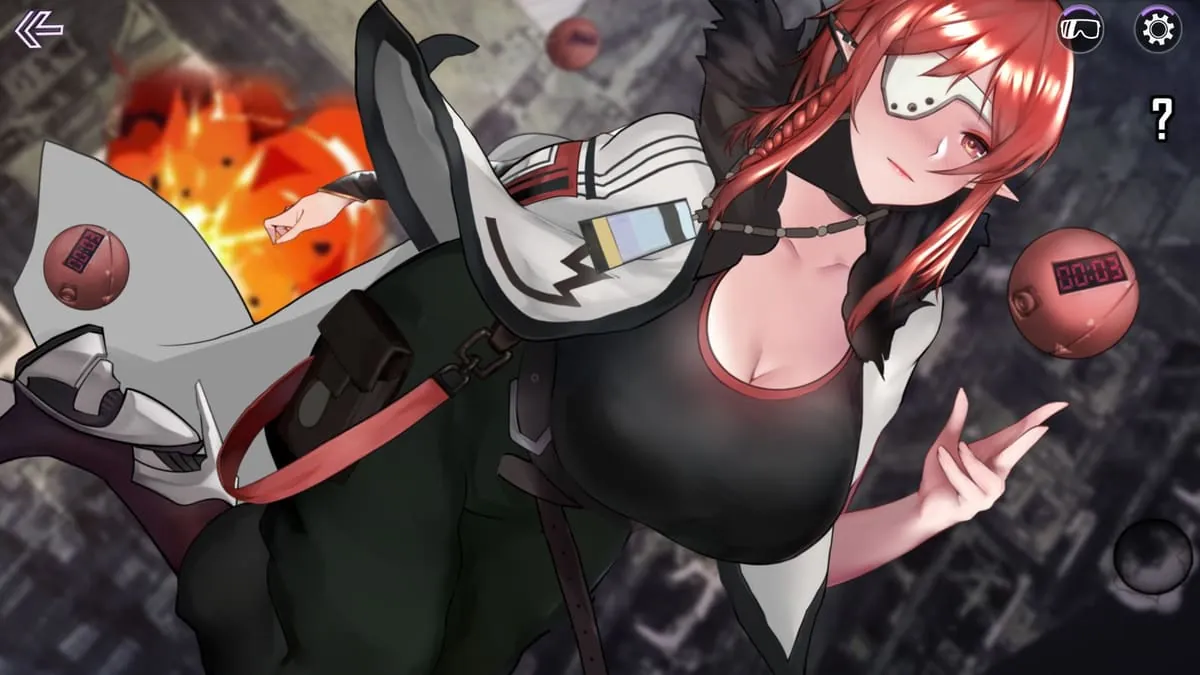
Meeting
Play Meeting
Meeting Screenshots






Meeting review
Master branching narratives, character relationships, and hidden endings in this interactive visual novel
Meeting stands out in the adult gaming landscape as a boundary-pushing interactive visual novel that prioritizes meaningful choices and emotional depth. Unlike traditional adult games that rely solely on visual content, Meeting combines cinematic storytelling with genuine player agency, where every decision shapes your relationships and unlocks unique scenarios. Whether you’re new to interactive narratives or a seasoned player, this guide explores what makes Meeting’s dynamic gameplay, rich character development, and personalized story arcs so compelling. Discover how this game transforms passive observation into active participation, where your choices genuinely matter.
Understanding Meeting: Core Mechanics and What Sets It Apart
You’ve probably played those other games. You know the ones. 🎮 Click through some static images, make a binary “yes or no” choice every twenty minutes, and end up with a nearly identical experience every time. It feels more like browsing a slideshow than shaping a story. If you’re fed up with that lack of depth, you’re in the right place. Meeting isn’t just another title on the shelf; it’s a paradigm shift for the entire genre, built from the ground up on the pillars of meaningful player agency and emotional consequence.
At its heart, Meeting is an intricate clockwork of cause and effect. Every conversation, every glance, and every decision you make—or choose not to make—reverberates through its world. This isn’t about collecting scenes; it’s about living a story that feels uniquely yours. The Meeting game mechanics are designed not to simply offer illusion, but to deliver tangible, sometimes startling, narrative power into your hands. Forget what you know about linear plots. Here, we dive into the systems that make this possible. 🚀
What Makes Meeting Different From Generic Adult Games
Let’s get straight to the point: most adult games are, frankly, pretty lazy. They offer a basic fantasy with minimal interaction. Meeting does the opposite. It starts with a simple but revolutionary premise: the adult elements aren’t the goal; they are the potential result of deep, authentic relationships and compelling storytelling. Think of it like the difference between a cheap fast-food meal and a gourmet, multi-course dinner where you get to choose the ingredients. 🍽️
Where generic games give you a cardboard cutout and a script, Meeting presents you with living, breathing characters with pasts, insecurities, goals, and moods that change from day to day. Your interaction with them determines everything. I remember on my first playthrough, I treated a character’s casual coffee invitation as a low-priority event, opting to work late instead. Big mistake. 💼 That choice wasn’t just logged as “missed event”; it fundamentally altered that character’s perception of my protagonist. Weeks later in the story, when I needed their trust during a crucial moment, they were cold and dismissive. The game remembered my earlier slight, and it mattered.
This is the core of Meeting’s design. It replaces passive consumption with active participation. Your role isn’t to witness a story, but to co-author it through a sophisticated web of interactive visual novel choices. The game’s systems—the dialogue wheel, relationship trackers, and time management—aren’t just UI elements; they are the tools of your authorship.
To see this contrast clearly, let’s break it down side-by-side:
| Feature | Generic Adult Games | Meeting |
|---|---|---|
| Story Depth | Thin pretext to connect scenes. Plot is linear and inconsequential. | Rich, character-driven narratives with complex themes. The plot branches and evolves based on player decisions. |
| Animation & Visuals | Often static images or very limited, repetitive loops. | High-quality, dynamic animations that feel like natural extensions of the conversation and emotional beats. |
| Player Agency | Illusion of choice, with most decisions leading to the same few outcomes. | Authentic meaningful player agency. Small and large choices permanently alter character relationships, story paths, and available content. |
| Replay Value | Low. Once you’ve seen the limited scenes, there’s little reason to return. | Exceptionally high. Dozens of endings, hidden character arcs, and secret scenarios only unlocked through specific choice combinations. |
| Immersion Level | Low. You are an observer clicking through a predetermined sequence. | High. You feel responsible for your relationships and the consequences of your actions, creating deep emotional investment. |
See the difference? Meeting is built for the player who craves a story, not just a stimulus. It’s for those who want to ask, “how do Meeting game choices affect story?” and discover that the answer is, “In every way imaginable.”
The Dialogue Wheel and Timed Decision System
This is where your influence truly comes to life. Meeting ditches traditional text boxes for its signature dialogue wheel system. Imagine a circle of potential responses floating around your character, each one representing a different tone, intention, or piece of information. This isn’t just about picking what to say; it’s about deciding how to say it. 😮
You might have options like:
* A supportive, empathetic response (top of the wheel)
* A flirty, teasing remark (right side)
* A logical, analytical question (bottom)
* A defensive or sarcastic retort (left side)
The position and color often hint at the emotional weight of the choice. But here’s the kicker: these options are frequently timed. You have only a few seconds to choose. This mechanic is genius because it eliminates save-scumming (constantly reloading to test choices) and forces you to rely on your gut. It creates genuine tension during arguments, intimate moments, or high-stakes conversations. You can’t overthink it; you have to be in the moment with your character. This is a masterclass in branching narrative gameplay because it makes every conversation feel immediate and real.
My most heart-pounding moment came during a heated argument with a central character. The dialogue wheel popped up with three fiery red options and one calm blue one, all ticking down rapidly. My instinct was to fight fire with fire, but I chose the calm option at the last second. It completely defused the situation and opened up a path of reconciliation I didn’t know existed. Had I chosen angrily, I might have permanently burned that bridge. The dialogue wheel system doesn’t just record your words; it captures your intent and your hesitation.
This system is the primary engine for the game’s relationship meters adult game mechanics. Characters don’t just have a simple “like/dislike” bar. They have multi-faceted meters tracking trust, affection, rivalry, and even resentment. A flirty comment might raise affection but lower trust if it seems insincere. A brutally honest critique might hurt affection but significantly boost respect. The game’s characters will call you out on inconsistencies, too. If you swing wildly between kind and cruel, they’ll comment on your unpredictability, making the relationship feel astonishingly real. 👥
How Branching Narratives Create Personalized Experiences
Now, let’s connect the dots. Every choice on the wheel, every managed moment of your time, feeds into the grand architecture of Meeting’s branching narrative gameplay. This isn’t a “choose your own adventure” with three endings. This is a sprawling narrative tree where a decision in Chapter 1 can determine which characters you even meet in Chapter 4, and what opportunities are available in Chapter 7.
The game employs a “flag” system. Every significant choice sets a hidden flag. Later events check for the presence or combination of these flags to determine what happens. This creates a phenomenally personalized story.
Practical Tip: Don’t try to “game” the system on your first playthrough. Play authentically, as you truly feel. The most rewarding stories in Meeting come from genuine reactions, not from following a guide.
Let’s walk through a real example of this cascade effect:
- Early Game (Day 3): You’re at a cafe. A side character, Leo, is struggling to carry boxes. Your dialogue wheel system offers: 1) Ignore him, you’re busy (left), 2) Offer to help (top), 3) Make a joke about his clumsiness (right).
- Choice Made: You choose option 2, Offer to help. It takes 15 minutes of your in-game time.
- Immediate Result: Leo’s “Friendship” meter with you begins. You get a little scene of small talk.
- Mid-Game (Day 22): Because you helped Leo, he mentions your kindness to his roommate, a reclusive artist named Mara. This unlocks the possibility of meeting Mara at a gallery event, a character entirely absent from playthroughs where you ignored Leo.
- Late Game (Day 45): Your relationship with Mara has deepened. She reveals she’s preparing for a major exhibition but is plagued by self-doubt. Because of your established relationship path, you get a unique option to spend a whole weekend supporting her, a scenario that leads to an incredibly intimate and emotional sequence unavailable through any other path. This entire, rich storyline was born from a single, minor, kind choice three weeks earlier.
This is the power of how do Meeting game choices affect story. It creates unparalleled replay value. Your second playthrough isn’t just a slight variation; it can be a radically different experience with new characters, conflicts, and destinations. You’ll find yourself constantly surprised by the content you missed, the reactions you didn’t see, and the endings that seemed impossible before.
Mastering Meeting means embracing its philosophy: you are not a passenger. You are the pilot, navigator, and cartographer of your own unique journey. Its Meeting game mechanics—from the tense dialogue wheel system to the profound branching narrative gameplay—are all in service of that singular vision. It trusts you with true meaningful player agency and rewards you with stories that feel earned, relationships that feel authentic, and a world that feels alive, all responding to the subtle and dramatic interactive visual novel choices you make every step of the way. 🗺️✨
Meeting represents a significant evolution in adult interactive entertainment, proving that meaningful storytelling and genuine player agency can coexist with intimate content. By prioritizing character depth, emotional immersion, and consequential choices, Meeting transforms the experience from passive observation into active participation where your decisions genuinely shape relationships and unlock unique narratives. The game’s branching storylines, dynamic character interactions, and multiple endings create exceptional replay value that keeps players engaged across numerous playthroughs. Whether you’re drawn to the complex emotional narratives, the sophisticated dialogue system, or the satisfaction of discovering hidden scenarios, Meeting delivers an experience that respects player intelligence and agency. Start your journey today and discover how your choices create a truly personalized story.