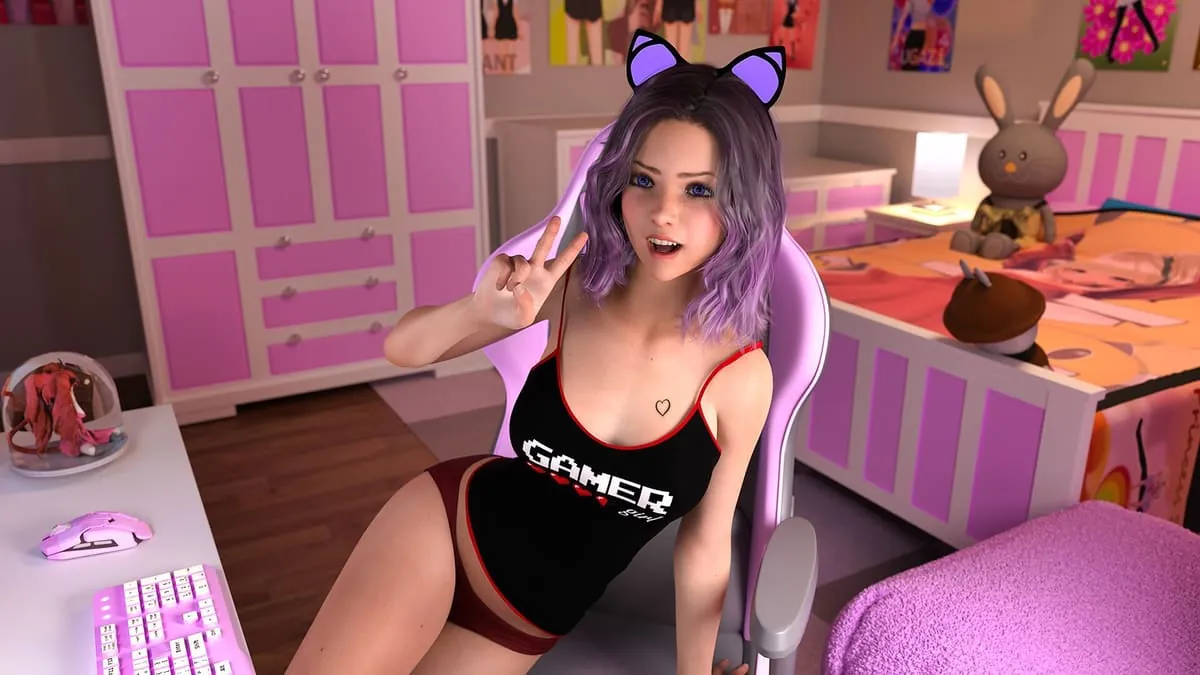
Second Chance
Play Second Chance
Second Chance Screenshots




Second Chance review
A comprehensive guide to the interactive narrative adventure with player-driven choices
Second Chance is an adult-themed interactive game that combines storytelling with player-driven choices, offering a unique experience in its genre. Developed by coman and Oliv_Niko, this game emphasizes narrative depth and player agency, allowing gamers to shape their own story through meaningful decisions. Whether you’re interested in exploring the game’s branching storylines, understanding its character system, or learning about the various content options available, this guide covers everything you need to know about what makes Second Chance stand out in interactive fiction gaming.
Gameplay Mechanics and Story Structure
Picture this: you’re at a pivotal moment in a story. A character you’ve grown to trust is begging for your help, but helping them means betraying another. The old you, the passive reader or viewer, would just watch what happens next. But in Second Chance, you decide. Your mouse hovers over the options, your heart rate picks up a little, and with a click, you irrevocably change the course of the tale. This isn’t just playing a game; it’s co-authoring your own unique novel. Welcome to the heart of this interactive narrative game, where every decision carries weight and the story bends to your will.
This chapter is your backstage pass to the machinery that makes Second Chance tick. We’re peeling back the curtain on the gameplay mechanics and intricate story structure that transform a simple tale into a deeply personal adventure. Forget about complex controls or punishing skill checks—here, your most important tool is your judgment. 🧠 We’ll explore how your choices create ripples that turn into waves, how the game’s branching pathways are built, and what it truly means to reach the “end” of a story that has dozens of them. Get ready to understand not just what you’re playing, but how your mind becomes part of the game itself.
How Player Choices Shape Your Experience
Remember that book you read where you shouted at the protagonist, “Don’t open that door!”? In Second Chance, you get to stop them. The core philosophy here is player-driven choice. This isn’t an illusion; your decisions are the primary engine of the experience. From the seemingly mundane (do you offer a comforting word or a sarcastic remark?) to the profoundly moral (do you protect a secret or expose a truth for the greater good?), each selection weaves a new thread into the narrative tapestry.
Let me give you a personal example from my playthrough. Early on, I met Jake, a seemingly gruff ally with a hidden soft spot. In one scene, he asked me to cover for him with a superior. I had two core options: show unwavering loyalty and agree, or pragmatically suggest he face the music himself. I chose loyalty. This single act didn’t just earn me a few extra dialogue lines. It unlocked entirely new scenes hours later where Jake, trusting me implicitly, brought me into his confidence on a dangerous side mission. A friend who chose the pragmatic path never saw that mission. Their Jake remained a useful, but distant, acquaintance. That’s the power here—your player-driven choices don’t just change the ending; they change the entire journey, the relationships, and the information you have access to.
To master this, think of your choices as investments in the story’s world and characters. The game brilliantly avoids simple “good vs. evil” sliders. Instead, your choices define your character’s personality and alliances. Are you the compassionate listener, the cunning strategist, or the defiant rebel? The game remembers, and the world reacts accordingly. 🤝
Here are the key features that make this choice system so impactful:
- Meaningful Consequences: Choices lead to tangible plot shifts, altered relationships, and exclusive scenes. There are no “right” answers, only your answers.
- Character Relationship Building: Every interaction is a brick in the foundation of your relationships. Trust, romance, rivalry, and betrayal are all built choice by choice.
- Moral Ambiguity: The game presents dilemmas where every option has a cost. You’re often choosing between shades of gray, not black and white, which makes the narrative gameplay deeply engaging and reflective.
- Hidden Triggers: Certain combinations of choices can unlock secret pathways or scenes, rewarding attentive and consistent role-playing.
Pro Tip: Don’t try to “game” the system on your first playthrough. Play authentically, as if you were truly in the story. You’ll get a far richer and more personal experience. The beauty of a choice-based adventure game like this is living with your decisions, not optimizing them.
The result is a profound sense of agency. You’re not following a story; you’re arguing with it, collaborating with it, and sometimes wrestling with it. This is the essence of modern interactive fiction—a story that breathes and changes with you.
Understanding the Branching Narrative System
So, how does the game keep track of all our individual chaos? 🧩 It’s not magic (though it feels like it); it’s a meticulously crafted branching storyline system. Think of the main plot not as a straight line from A to B, but as a sprawling tree. The trunk is the shared beginning, but each major decision you make sends you down a different, thickening branch. From there, smaller choices become twigs and leaves, creating a canopy of possibilities that is unique to your path.
This structure is what allows for genuine story variants. It’s not just about getting a “good” or “bad” ending slide. Two players can have dramatically different middle chapters. One might be deep undercover with a faction another player never properly met. Another might be navigating a complex romantic subplot that was closed off due to an early, seemingly unrelated choice. The branching narrative ensures your story feels bespoke.
The game’s architecture is smart about resource management, too. It doesn’t create 100% unique scenes for every minor choice. Instead, it uses variables—flags that track your decisions—to modify existing scenes. The location and core action might be the same, but the characters present, the dialogue options, and the emotional tone will be completely different based on your history. This means you experience a huge amount of variety without the game becoming an impossibly large file size.
To visualize how a single moment can fracture the narrative, consider this common story node:
| Your Critical Decision | Immediate Story Branch | Long-Term Narrative Impact |
|---|---|---|
| Trust the mysterious informant. | Gain secret knowledge; your official allies become suspicious. | Unlocks a clandestine mission path; alters which allies are available for the final act. |
| Report the informant to authorities. | Earn institutional trust; the informant vanishes. | Gain access to high-level resources; lose the chance to uncover a hidden conspiracy thread. |
| Investigate the informant on your own. | Delay both trust and knowledge; risk exposure. | Potentially discover a third truth, creating a unique, hybrid path with elements of both other branches. |
This kind of structure makes replayability not just a bonus, but a core part of the experience. Your second playthrough of Second Chance isn’t just a refresher; it’s a brand-new story waiting to be discovered. You’ll constantly be surprised by how different the same overarching plot can feel, solidifying its place as a premier interactive narrative game.
Story Completion and Content Variants
“Beating” a game like Second Chance is a wonderfully fuzzy concept. 🏆 You don’t simply defeat a final boss and see credits. You reach a conclusion—one of many valid, often emotionally complex endings for your particular version of the protagonist and their world. A typical playthrough, if such a thing exists, takes about 6 hours to reach one of these narrative conclusions for the current storylines. But that’s just the first chapter of your overall experience with the game.
This 6-hour journey is packed with narrative gameplay, but it’s also respectful of your time and boundaries. The game features optional scenes—side stories, deeper character moments, or world-building vignettes that you can pursue or skip. These don’t block main progression but enrich it immensely, allowing you to tailor the pacing and depth of your story. Furthermore, Second Chance is commendably upfront about its content. It employs a content warning system at the start of certain scenes that may contain intense thematic material. This isn’t about censorship; it’s about player agency. It gives you the informed choice to engage with challenging content when you’re in the right headspace for it, or to skip ahead, preserving your comfort without breaking the narrative flow.
The true measure of content here is in the story variants. Let’s define what that means in practical terms. Based on your player-driven choices, you might experience:
- A Different Central Conflict: The core antagonist or primary problem you spend the story solving could change based on your allegiances.
- Alternate Character Arcs: A character who becomes your closest friend in one playthrough might remain a neutral party, or even become an adversary, in another.
- Varied Emotional Endings: Conclusions can range from bittersweet and hopeful to tragic or triumphantly joyful, all feeling earned based on your path.
- Exclusive Story Beats: Entire subplots, revelations, and locations can be locked or unlocked.
Because of this, talking about the “story” of Second Chance with another player is a fascinating exercise. You’ll compare notes and often find you’ve experienced what feel like different tales within the same compelling world. This is the pinnacle of interactive fiction—a story that is both singular in its setting and plural in its execution.
Ultimately, the gameplay mechanics and story structure of Second Chance work in perfect harmony to create one thing: a personalized story that feels truly yours. The branching storyline system provides the architecture, and your player-driven choices provide the soul. It proves that in a great choice-based adventure game, the most powerful character isn’t on the screen; they’re holding the mouse. Your journey through its world will be unlike anyone else’s, and that is its greatest achievement.
Second Chance stands out as a thoughtfully crafted interactive narrative game that prioritizes player choice and storytelling depth. With its diverse character roster, inclusive content options featuring both male-male and male-female relationships, and availability across multiple platforms including Steam and Android, the game offers accessibility to a wide audience. The developers’ commitment to respecting player agency through optional content and clear warnings demonstrates a mature approach to adult gaming. Whether you’re drawn to the branching narrative structure, the character-driven storylines, or the overall quality of the interactive experience, Second Chance delivers a compelling adventure that has resonated with players worldwide. For those seeking a game that combines meaningful choices with engaging storytelling, Second Chance represents a standout title worth exploring.